Personal project ·
Debate Studio
I built Debate Studio to make multi-agent coding decisions inspectable - from independent proposals to reviewed code and reusable project knowledge.
Why I built it
I wanted two independent takes on a coding problem, without losing track of how the discussion became an implementation. Debate Studio runs the local Claude Code and Codex CLIs in separate sessions and brings their plans, changes and reviews into one workspace.
Each agent has its own session, and I choose who plans, implements and reviews. I can compare their proposals and follow my decision into the patch and the reviewer’s findings.
If a lesson is worth keeping, I can approve it as shared project memory. When either agent receives it on a later task, I can trace it back to the original review. The agents reuse that knowledge as context; this does not retrain their underlying models.
See it in action
This silent, 26-second walkthrough uses sample project data. Claude adds a flag to a small Python CLI; Codex asks for an additional invalid-input test. The final decision stays with the user.
How I built it
I built the desktop app with Electron, React and TypeScript. It runs the locally installed Claude Code and Codex CLIs and uses Git against the project on my machine.
- A stable starting point: A new implementation gets a separate branch and worktree. The app records its starting commit so the review can compare against that point even if the main branch moves.
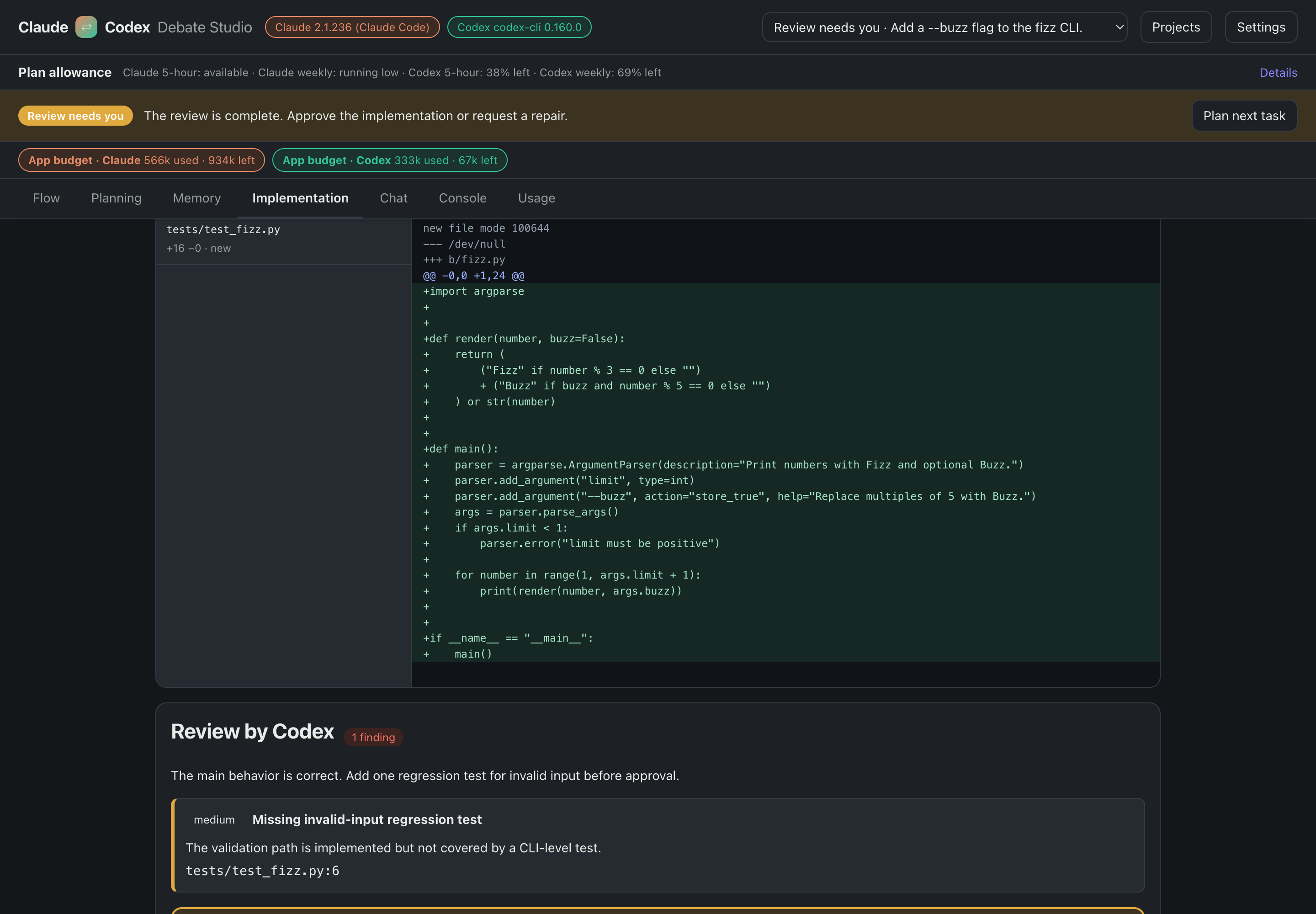
- A reviewable patch: The app reads the diff locally, including new files, and places it beside the review findings. Approving records my decision; it does not automatically merge the implementation branch.
- Context with provenance: Approved memory lives in local JSON files. File-linked notes are checked against the checkout the agent will use, and a receipt records what context each agent received.
Four ways to work
- Debate: Both agents plan independently, critique each other and vote on a combined proposal. I can accept it, edit it or ask for another round.
- Sequential: Separate planning, implementation and review roles for a clear handoff between agents.
- Solo: Use one agent when a task does not need a second perspective.
- Research: Assign the investigation to one agent and verification to the other.
The implementer works in an isolated Git worktree, keeping proposed changes separate from the main checkout. The reviewer inspects the result; I can compare the patch with the findings and approve it or request a repair.
Memory I can approve and inspect
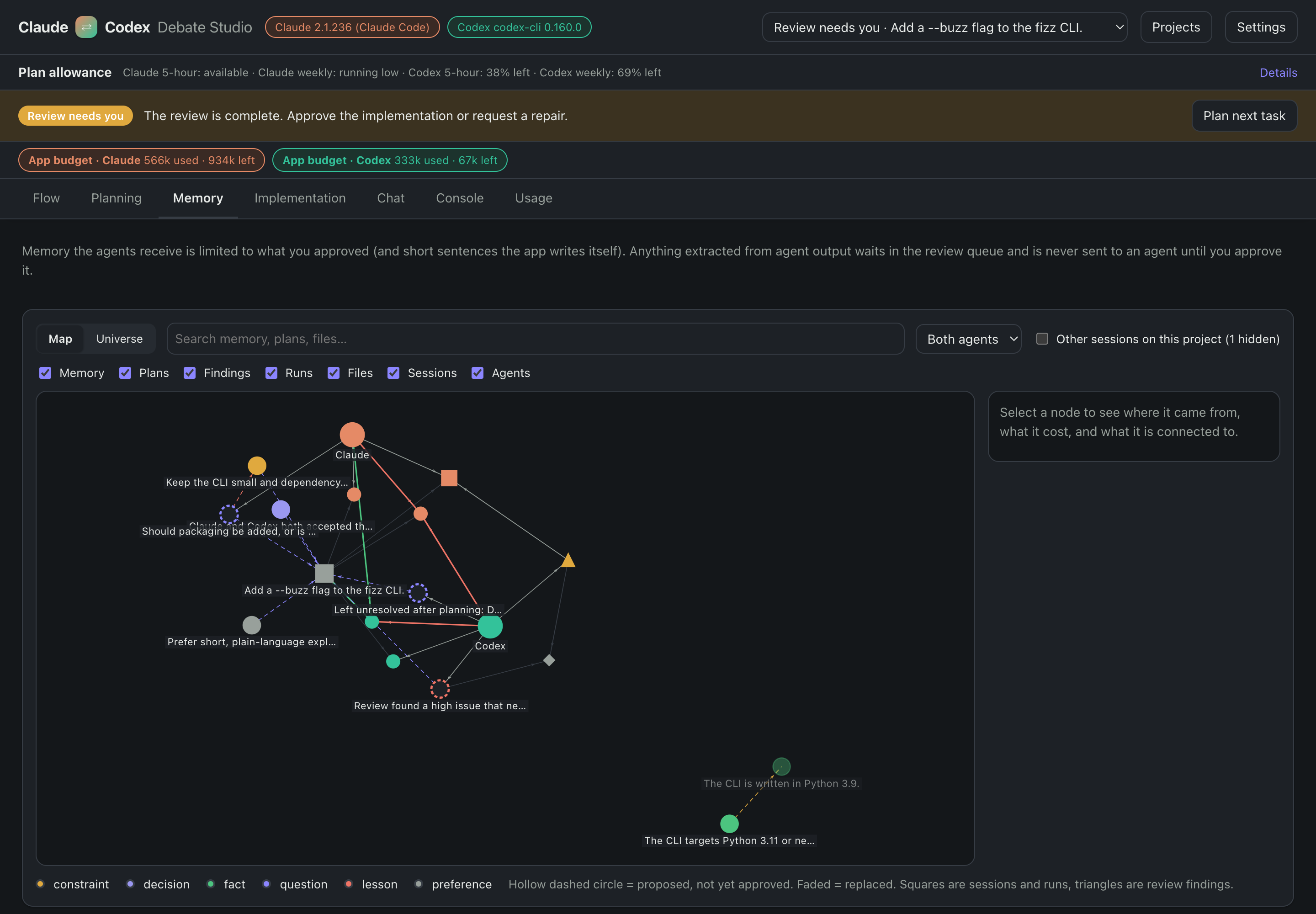
Each agent has its own conversation. Shared memory carries approved project decisions, constraints and lessons into later tasks, even when a different agent takes the lead.
I built shared memory so I don’t have to explain the same project decisions every time I start a task or switch agents. Instead of passing along an entire old conversation, the app selects relevant, approved notes. The aim is to spend less context on rediscovering what we already decided and more on the current problem. I haven’t measured how much usage this saves overall.
- Local storage: JSON files hold session notes, project knowledge and preferences that apply across projects. Atomic writes protect against incomplete file updates.
- Approval and evidence: I can edit, approve or reject proposed entries. Notes can link to a session, review finding or file, and record their scope and whether a newer entry replaces them.
- Relevant context: The app prioritizes decisions and rules, filters facts and lessons against the task, and limits how much context it sends. File fingerprints help skip lessons when their supporting code has changed.
- Visible retrieval: A receipt explains what was included or skipped. The memory maps connect notes to their sources and the turns that used them.
Conversation recall was inspired by V-Mem’s approach to finding a specific message and showing the surrounding exchange. Debate Studio implements its own local BM25 keyword search, without a model call. I can open the original exchange and inspect the surrounding workflow. If shared memory changes during a resumed chat, the app can start a fresh session with updated context.
Seeing what happened
Projects surfaces work waiting on me. Planning holds proposals and votes. Flow and Console connect steps to recorded messages, tool activity and reported usage. Implementation puts code changes beside review findings. Chat lets me address either agent or both, and linked tasks can reuse relevant approved memory.
The Usage view separates my in-app budget from subscription allowance information exposed by each provider. When a provider reports an exhausted allowance, the app can pause work and resume after the reset while open or when reopened.